
Bracelet parts
Description & FAQ
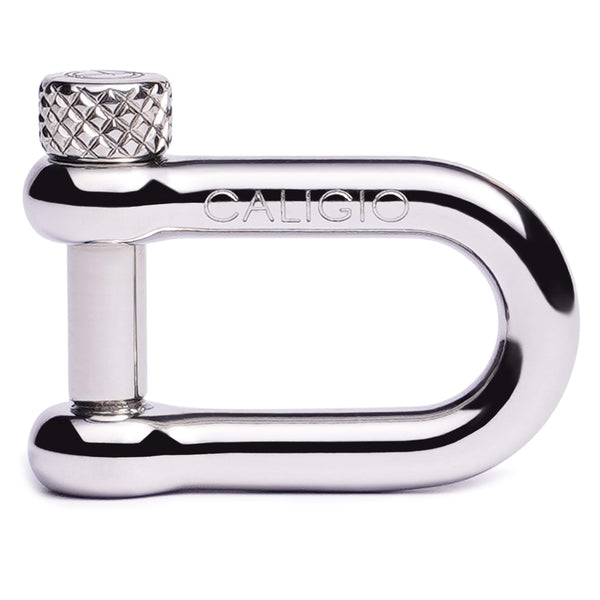
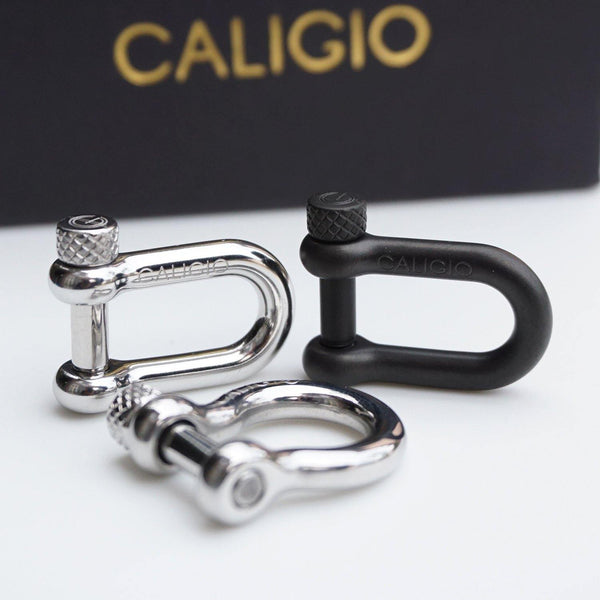
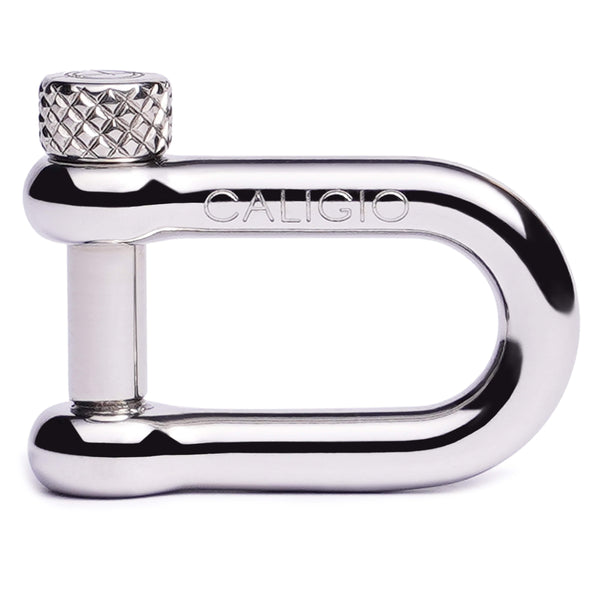
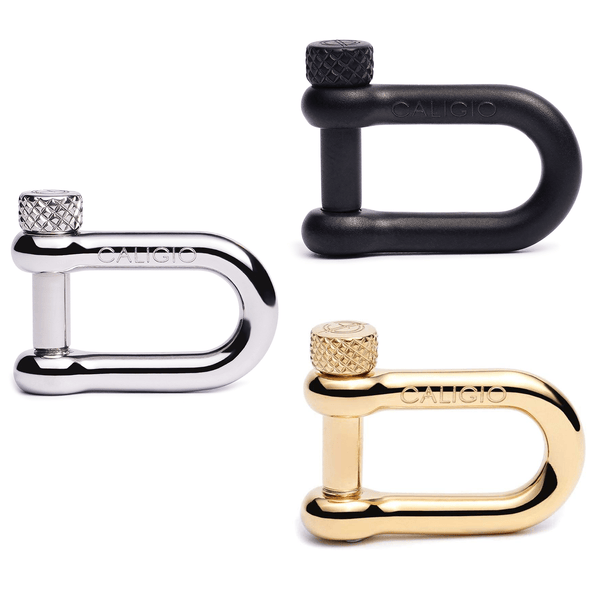
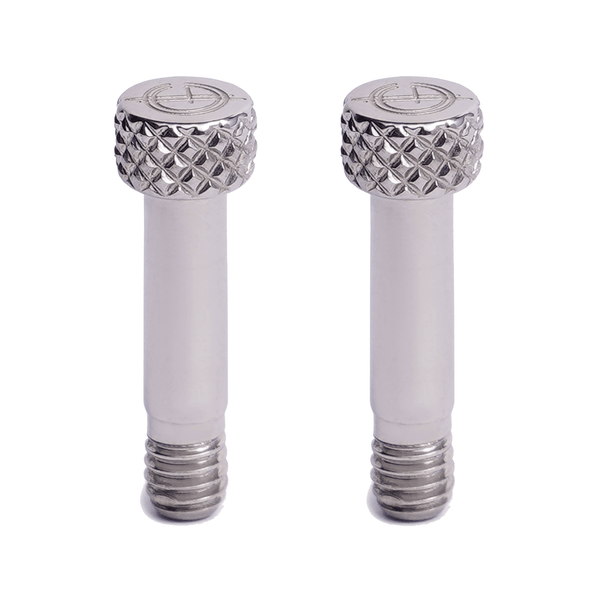
The Caligio Bracelet Parts collection is where customization and repair happen. Every Fortune, Nautical, Omega (nylon and leather variants), and Egoist bracelet in the catalog ships with a D-shackle as the default hardware - but the shackle is designed to be swapped. This collection gives you the hardware to do exactly that: replacement D-shackles, C-type shackles, and bow shackles across three finishes (polished silver, gold ion-plated, and black ion-plated), plus replacement screw pins for when the original pin gets lost or stripped. Nine shackle combinations total across shape and finish. One band, completely different look depending on the hardware you put on it.
All parts are made from 316L surgical stainless steel - the same material as the bracelets themselves. Hypoallergenic, tarnish-free, rust-free, and fully waterproof. Shackles are sold individually or in 3-packs so you can switch between finishes without reordering. Screw pins are sold individually or in 2-packs as a direct replacement for a lost or worn pin. Compatible with all Caligio bracelets that use the standard D-shackle system: Fortune, Nautical, Omega (nylon and leather variants), Binate, and Egoist. Not compatible with Prime (magnetic clasp), Sailor (fixed anchor clasp), or Infinity and Wild (cuff or proprietary closure).
Frequently Asked Questions
Which Caligio bracelets are compatible with replacement shackles?
All bracelets that use the standard D-shackle system: Fortune, Nautical, Omega (nylon and leather variants only - cotton Omega has a fixed shackle), and Egoist. Not compatible with Prime (magnetic clasp), Sailor (fixed anchor clasp), Gio and Binate (screw clasp), or cuff-style bracelets like Eros, Arc, Infinity, and Wild.
What is the difference between D-type, C-type, and bow shackles?
D-type is the default Caligio shackle - a straight-backed D shape that distributes load along a single axis, the same design used in marine rigging for over two hundred years. C-type has a more open, curved profile that sits slightly differently on the wrist and gives more visual space between the hardware and the cord. Bow (O-type) is a rounded shackle with a wider body - the most visually prominent of the three and the heaviest-looking on the wrist. All three screw the same way and fit the same cord holes.
How do I swap the shackle on my bracelet?
Simply unscrew the pin counterclockwise until it comes free from the shackle body. The pin is captive on most designs so it stays connected to the shackle. Pull the shackle out from the cord loop, slide in the new shackle, and screw the pin back clockwise until secure. Takes about 30 seconds.
What finishes are available?
Three finishes across all shackle shapes: polished silver (316L natural steel), gold (ion-plated), and black (black ion-plated). Combined with three shapes, that gives you nine possible hardware combinations on a single bracelet band. Buy one finish to match your existing hardware, or buy the 3-pack to rotate between looks.
When do I need a replacement screw pin?
If the original pin is lost, stripped, or no longer threads properly, the bracelet cannot close securely. A replacement screw pin restores full function instantly. Pins are sold individually or in a 2-pack. Order the 2-pack if you have more than one bracelet using the same shackle system or want a spare on hand.
Are the replacement parts waterproof?
Yes. All shackles and pins are made from 316L surgical stainless steel - fully waterproof, tarnish-free, and rust-free. The gold and black finishes are ion-plated for long-term color retention through water exposure. Same material standard as every other piece of hardware in the Caligio catalog.
Is the 3-pack a better value?
Yes, if you want more than one finish. The 3 Pack Shackles includes all three finishes (silver, gold, black) in the same shape - giving you the ability to swap the look of a single bracelet across three different metal tones. The 3 Pack Bow-Shackles does the same for the bow shackle shape specifically.
What is the D-shackle and where does the design come from?
The D-shackle is a marine hardware design used on sailing yachts, climbing harnesses, and industrial rigging for over two hundred years. The D-shape distributes load along a single straight axis, which makes the closure reliable under tension. Caligio adopted it as the signature closure for its rope and leather bracelet lines because it looks like nothing else in the accessories category.
Can I use a gold shackle on a silver-hardware bracelet?
Yes - and mixed metal hardware is a deliberate styling choice for many Caligio customers. A gold bow shackle on a black Fortune cord, or a black ion-plated D-shackle on a beige Gio - these combinations work. The shackle becomes the accent piece rather than the matching element. Try it before committing to one finish.
What should I order if I just lost the screw pin?
Order the Shackle Screw Pin (single) or the 2 Pack Shackle Screw Pins. You do not need a full replacement shackle if the shackle body itself is intact - just the pin. Match the finish to your existing shackle: silver pin for silver shackle, gold for gold, black for black ion-plated.






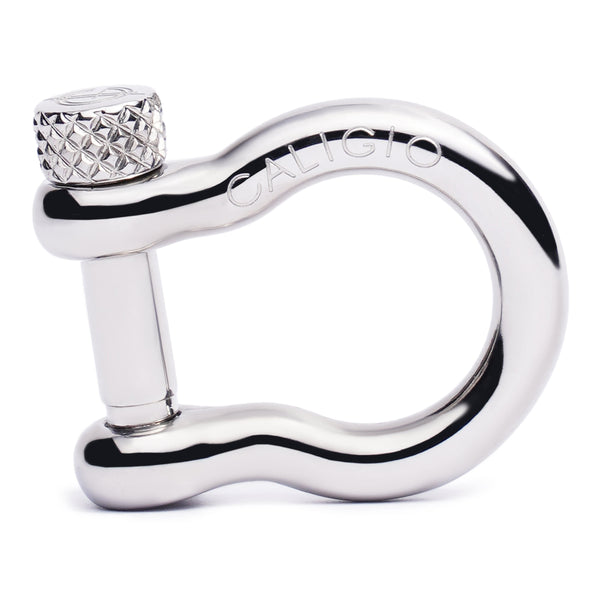
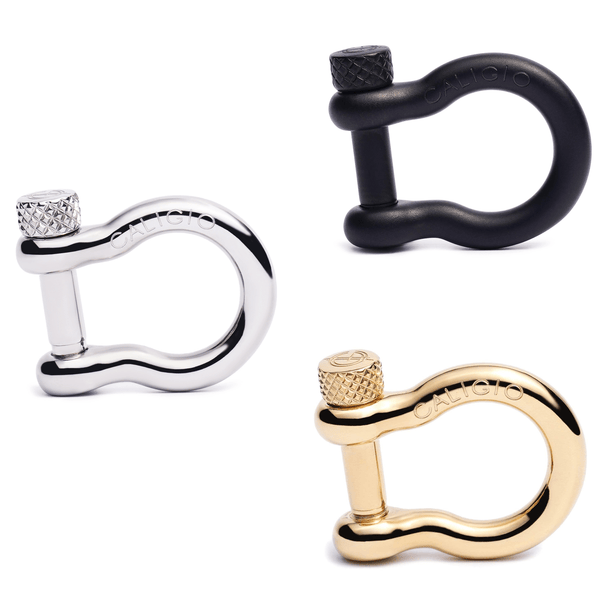


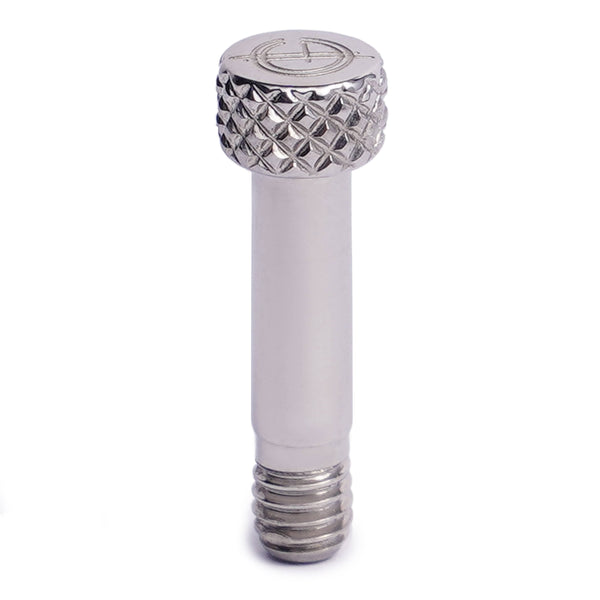
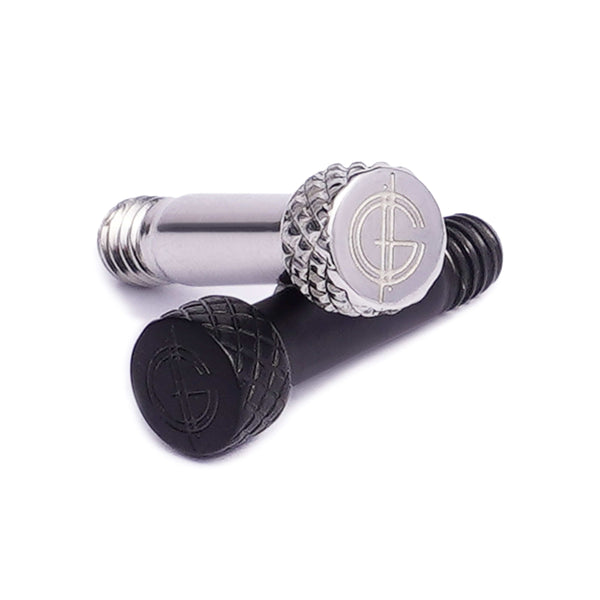


Built for the D-shackle system
Fortune, Nautical, Omega (nylon and leather), and Egoist all ship with the same D-shackle hardware. That means every shackle and screw pin on this page fits directly onto those bracelets, no adapters or modifications needed. Shop Fortune, shop Nautical, shop Omega, or shop Egoist to see the full lineup each part is compatible with.
Bracelet anatomy: every part has a name
A Caligio bracelet breaks down into three parts: the cord or band (the paracord, nylon, or leather that wraps the wrist), the shackle (the metal hardware that closes the loop), and the screw pin (the small threaded rod that locks the shackle shut). Knowing these three terms makes it easier to order the right replacement part instead of guessing which piece failed.
D-shackle, C-shackle, and bow shackle: where the shapes come from
All three shackle shapes trace back to marine rigging, where sailors needed a closure that would not work loose under constant motion and salt exposure. The D-shackle keeps that straight-backed profile largely unchanged from its sailing-ship origins. The bow shackle (also called O-shackle) has a wider, rounder body originally used for heavier rope loads. The C-shackle is the newer of the three, designed for a more open silhouette that shows more of the cord underneath.
| Shackle | Profile | Origin |
|---|---|---|
| D-shackle | Straight-backed | Standard marine rigging |
| C-shackle | Open, curved | Modern reinterpretation |
| Bow shackle | Wide, rounded | Heavy-load rope rigging |
Why steel hardware instead of plated alloy or plastic
Some bracelet brands use plastic or painted alloy clasps to cut production cost. These wear through at the coating within months, exposing a dull grey base underneath. Every Caligio shackle and screw pin is solid 316L stainless steel, not a coated substitute, so the material is the same all the way through. There is no finish to chip because the color comes from ion-plating on solid steel, not a surface paint.
One band, nine looks
Most bracelet brands sell a fixed piece: one cord, one clasp, no changes after checkout. Caligio splits the hardware from the band instead, so the same Fortune or Omega bracelet carries silver, gold, or black hardware depending on what the day calls for. Three shackle shapes across three finishes give nine combinations from a single band, without buying nine separate bracelets to get there.
If the shackle feels loose
A loose shackle usually means the screw pin has backed out slightly, not a sizing problem. If you're searching how to adjust a shackle bracelet size, start there: thread the Shackle Screw Pin in fully clockwise before assuming a part needs replacing. If the shackle body itself feels stretched or the D-shape has visibly opened, that's wear from repeated stress, and the shackle should be replaced rather than forced back into shape.
Care for 316L steel hardware
No special maintenance required. Rinse with fresh water after ocean, pool, or sweat exposure, then dry with a cloth. Store hardware away from other metal jewelry during travel to avoid surface scratching. The steel does not need polishing or oiling to hold its finish over time.
Traveling with shackle hardware
316L steel shackles and pins rarely trigger airport metal detectors due to their small size, but TSA screening can vary by airport. Cord and leather bands with a single small shackle typically pass through security without issue. If a shackle does need to come off for travel, the screw pin system on this page allows it to be removed and reattached in under a minute.
Hardware as a styling choice
Some customers order a second or third shackle in a different finish simply to match a specific outfit or occasion: gold for a dinner reservation, black for everyday wear, silver to go with a watch. Since the shackle and band are separate pieces, switching between them takes seconds and works the same way as swapping a strap on a watch. It's a way to get more variety out of one bracelet without buying a second one. An extra screw pin is a small, inexpensive addition to keep alongside a spare shackle, so a full finish swap is ready to go whenever the mood calls for it.